
Things I learned in Italy
Art, God, Silence. And surprising truths about Da Vinci

Happy New Year, friends! I know, and agree, that this is not the start just yet. Winter is still very much here, and our true new beginning will come sometime in February. So enjoy that stillness, or embrace it a little more, while you can. This cold season is for reflection, embracing one’s shadows, quiet rest, and the first glimpses of dreams that will turn into goals as we welcome spring. Can you feel any sparks stirring within you, a direction or a path emerging, something quietly and subtly being born? Watch that space. Welcome it. The roots of a tree never sleep. The womb is still active; it’s just a little underground right now. Enjoy the quiet discovery of it.
I start 2026 with something I wrote during my trip to Italy a few months ago. It’s only lightly edited and presented as it came.
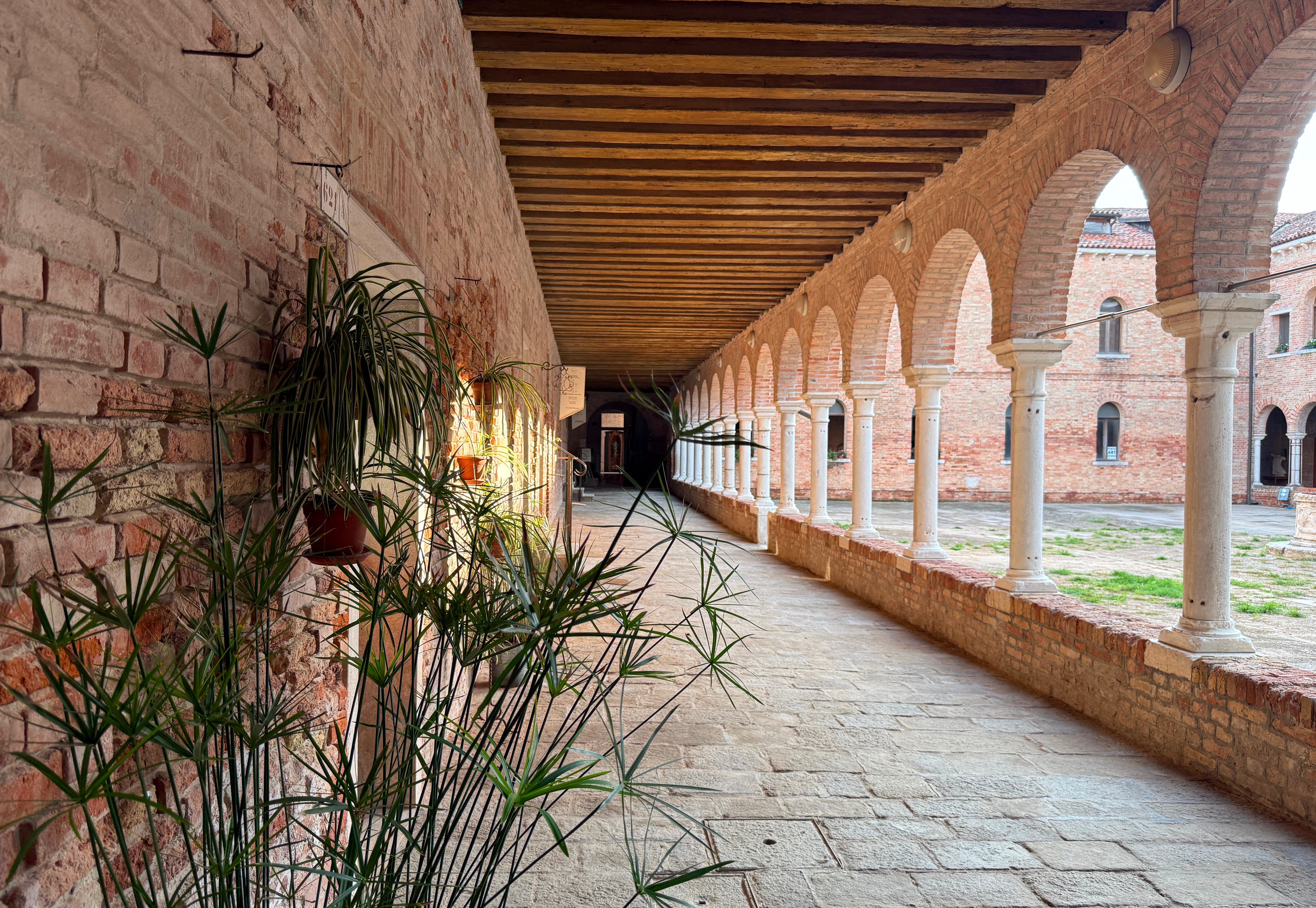
Things I learned in Italy.
I can go exploring and be mind-blown by art for like 3–4 days. After that I start becoming overwhelmed, a little crazy, and so full I just have to sit down and vomit it all out on a page. However it looks. And god does it feel good to type. Typing feels relaxing, like it’s the best thing I can do. Release. The way my fingers move, how the keyboard of my laptop feels while I do so. It’s a feeling I can’t quite explain. Just the urge to do it, and doing it. It’s like sex. Yes, I just said that. Writing to me is like sex. And I love sex. So.
I am led. Always led. If I ask for help, it’s always there. But signs of it pop up before that, like a little preview, a little clue, something that becomes a sign. Like looking at a map, checking what’s around in this new place I arrived at. A place called ‘New York Cafe’ pops up. I clock it. Obviously New York is significant for me these days (as I am planning a major adventure later in the year, more on that soon). So I see that name on the map, clock it, but nothing else.
Then, another time, I am wandering around. I can’t find any suitable place to write. It’s a Saturday, the town is overwhelmingly full of people, and no cafe looks laptop-friendly, somewhere I could hide enough. Overwhelmed by the crowds, I pop into an almost-empty church, to be in stillness for a little.
Churches have stayed with me since my childhood. I was raised Catholic, and my grandma used to drag me to church. I was a believer in my own way, and there was a time in my life when religion was the only thing that gave me hope—a belief that turned into a fantasy, that someone was out there, looking after me, leading me. I still carry a glimpse of that in me, except now it’s different, and I feel it much more. Except it’s not how they taught me it was. That does not resonate anymore.
What if it’s a little less like a temple or a rulebook, a man in the sky, and a little more like water—a river, an ocean—flowing, ever-changing, the same yet different all the time?
Everything needs updating. Even art. “You don’t have to be original to be creative,” our drama teacher used to say. But look, nothing is original. Nothing ever is. Artists steal—let’s call it steal, though it’s not quite that—from each other all the time. That’s how art grows, evolves, it’s forever changing. It adapts, branches out, finds many different people to speak to. Art is like the Earth itself, with its variety, many influences, overwhelmingly rich, forever growing, expanding, and, yes, dying—but then becoming food for others, so it never really dies. Everything on Earth is in some way recycled. Even species that have gone extinct—their tiny parts are still somewhere on this planet. Perhaps they left an imprint of energy, or a memory, even if the memory is a lesson to not do it again. Or to do it in a better way.
So is art. Rich. Everlasting. Always here. It will never die. As long as humans are around, art will always be around. Good art is a good story. Eyes that speak. Situation. Memory. Magic that’s been downloaded from who knows where, filtered through our lives, our personal and completely unique filters.
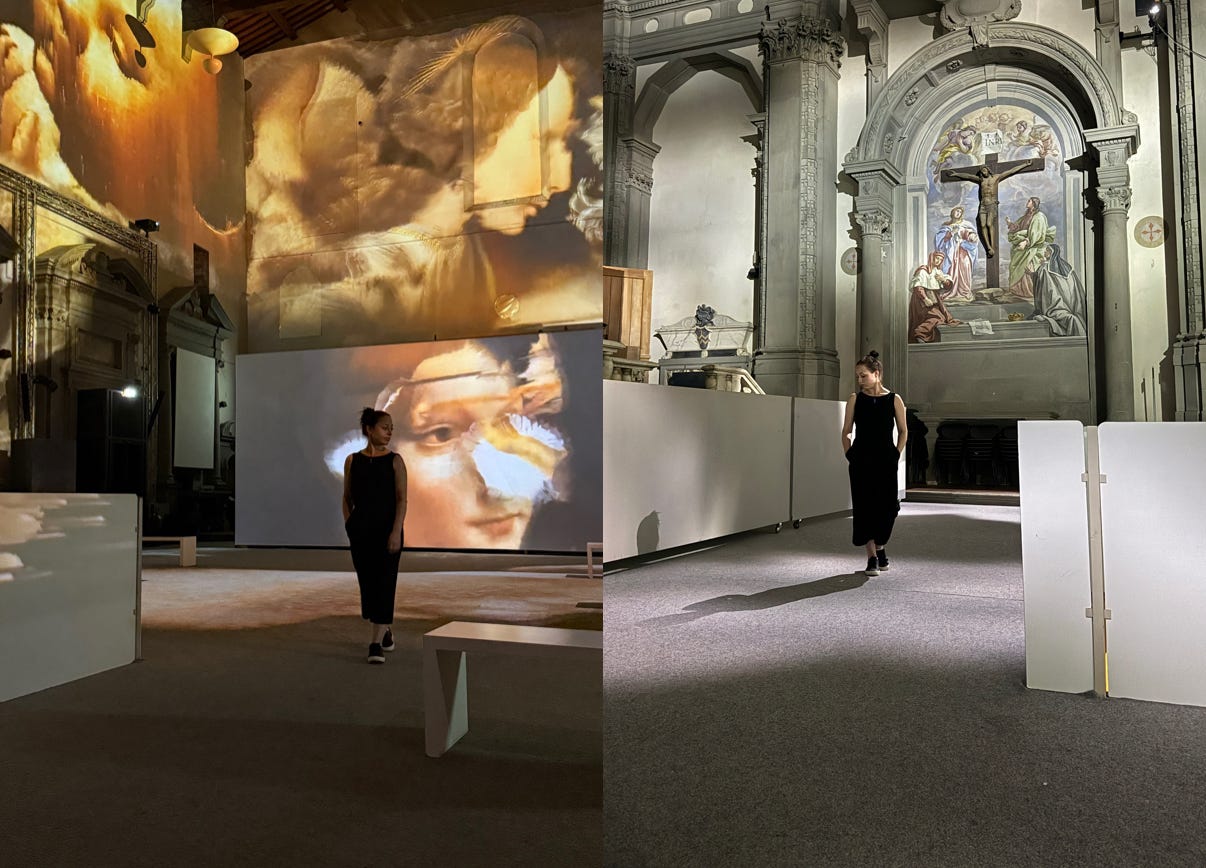
So, as I was in the church.
I found myself contemplating how places of prayer are good for giving one space to be in silence, in a protective environment, where the architecture and art create a special space. Enough to be stimulated, to be held by silence and presence. To be alone enough to meet one’s thoughts.
And if you go there at a random time, chances are you’ll find some rest outside the buzz of any city. Not every church feels good—some horrible things happened in churches too—but the energy of some is high. The years and years of song, prayer, stillness, and ritual, combined with the setting itself, more often than not, still feel like a sanctuary. (And many of them are built on sacred sites that were there before.)
Churches are updating too. And it’s amazing to see. In that space, that grandness of it all, you can do so much. I stumbled upon an immersive digital projection/art space, where they used a church hall—the grandness of it—and projected stories about Da Vinci, mixed with powerful sound and visuals. And it felt so powerful. Different. Engaging. Safe. New. Well, it was very well done. And I learned a lot about Da Vinci, in a fresh, accessible way. For an overstimulated mind, can we really learn as well using the old tools? My mind definitely is changing. I always was studious, but even me, after years of learning anything and everything, these days I feel different. Some things never really land, they just pass by. Is it because the information overload is too great? Or is it that the only things worth remembering are the ones that really stick?
Paulo Coelho suggests in his book The Witch of Portobello that one does not need a library—one discovers anything and everything when they need it.
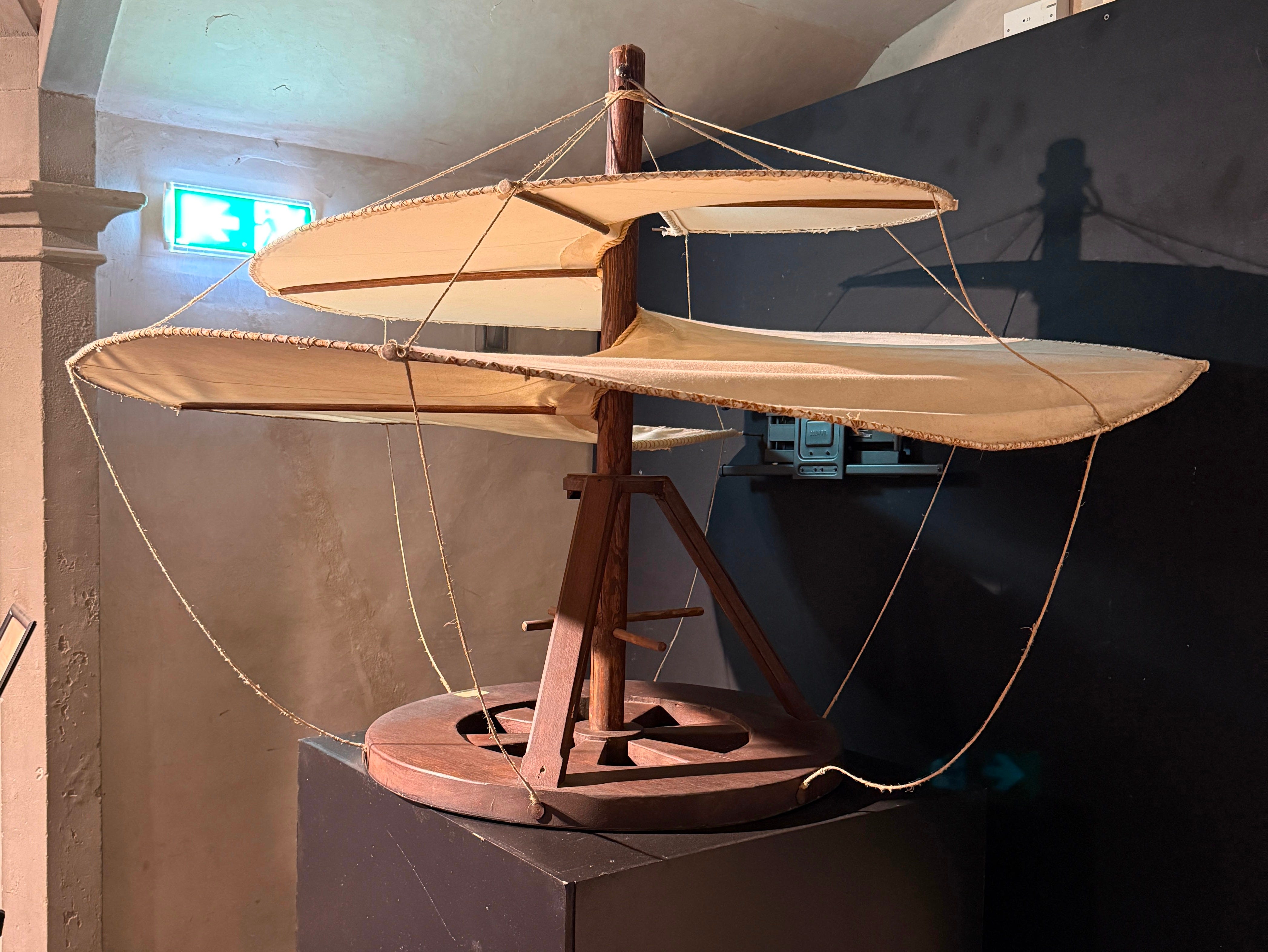
Like the fact I learned about Da Vinci—he created many war tools. He was an engineer, an inventor, not only a painter and all these other things. He made some of the best visual art he’s praised for (even a person not interested in art knows his name), yet he also created tanks, catapults, and tools to make warfare grander—machines to kill larger groups of people. Isn’t that crazy? Someone there, sitting in his lab, trying to come up with ways to kill bigger groups of people all at once. Who was this man? A genius? A visual poet? A powerful manipulator?
I mean, even if a genius—you have to have a lot of backup, powerful people around you, for your art and ideas to spread so widely and to remain on record. Think of it as PR of the old ages. Why do we know about some people, but the memories of others have died off? To have such a lasting effect, one has to have some magic, some mind-blowing, unique (but nothing is original, remember?) ideas, inventions, and the drive to keep producing as Da Vinci did.
Yet, you also have to be noticed by the decision-makers. You need people to introduce you, to get you published, to fund you. If you’re not born into a wealthy family, you will always need support. Da Vinci worked for many powerful people, who in turn used him but also helped create his legacy. His influence was, and still is, wide. But he was not the only one. And who knows who he learned from, stole from, and where his ideas were downloaded from…
He is still relevant because he is authentic, successful, and did more than regular people can. But he is also one of the kings of art and invention. He had power. And to rise to that power, you need many people around you. No genius is ever alone.
To be able to create has always been a luxury. Creation, just like invention, needs study, experience, and space for it to come out. That precious time is luxury. Even if you’re wealthy, you might still have to make that space. You need time away from people, or to find oneself surrounded by those who resonate and help. You need your basics met—food, shelter, influences in whatever form they come. Some art takes ages to produce; some paintings have taken years. Some books were written in a few months. Well, no, actually—even if a book is written in a few months, it’s the life experience that’s in those pages that needs to still be developed and created. Art is costly. Always has been. And some of the best art came from a very painful place. Because to touch people deeply, you need to understand what feeling that deep means.
Art chooses you. Your soul chooses art. You cannot kill it. It will come out. It will make you hungry. It will make you roam the streets searching for a coffee shop, desperately, just so you can release all of what you want to say on the page. Like getting rid of excess blood. Take it out of me—I have too much. I need to feel this—the release of my fingers tapping away and words forming. Stories mushing, ideas forming, the old, the new, and the learned—all becoming, again, something new. Something personal. Something uniquely me.
So I was at the church.
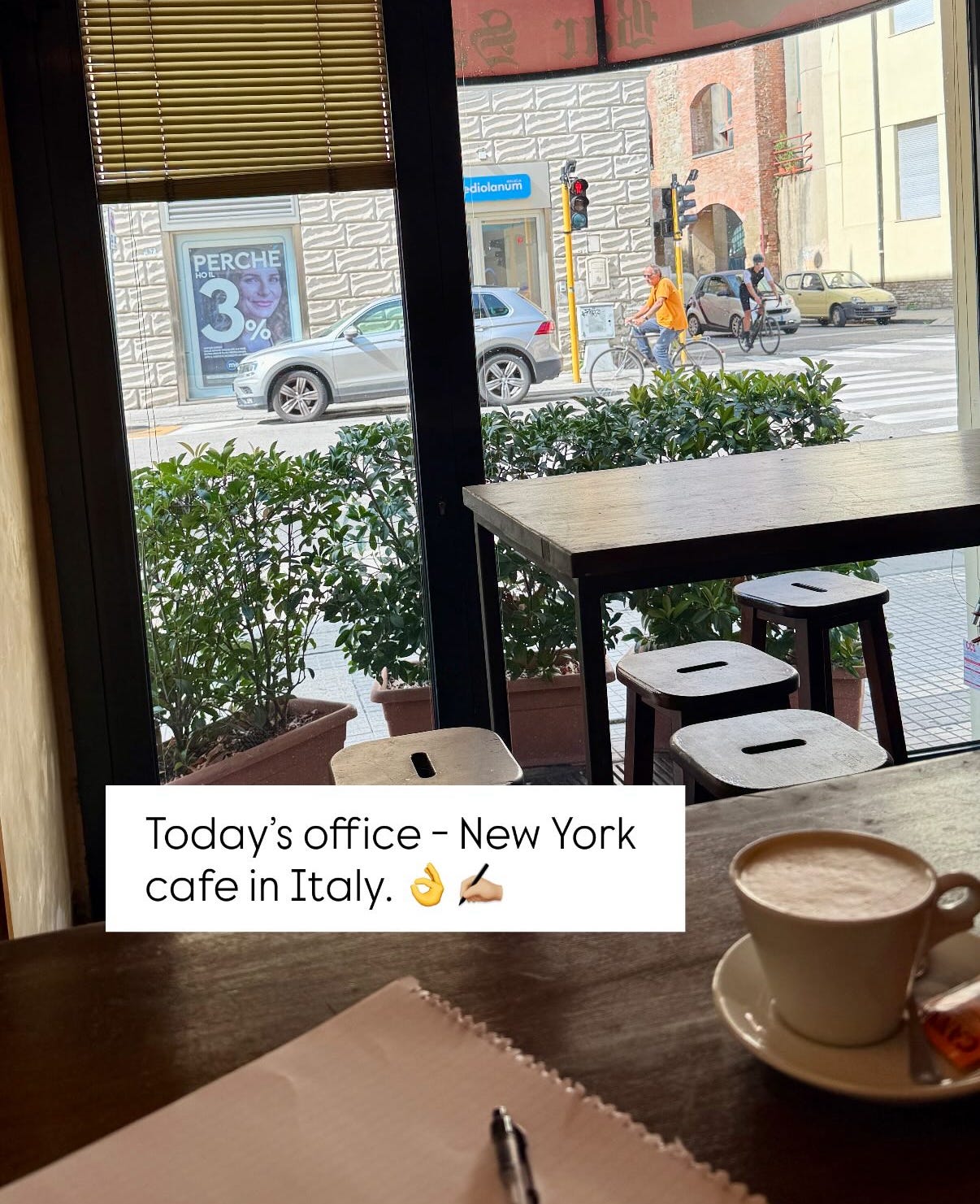
I was overwhelmed and I asked (I don’t know who I was talking to exactly), “Take me somewhere I can create in peace. I need to write.” I left the church, allowed my mind to go into stillness, and let my body take me—which it did, quite at speed—walking down the street where it wanted to, until… I came across a cafe. My body felt it—this is it. I stopped.
And guess what - the name of the place was New York Cafe. I laughed. Of course.
I went in. It was almost empty. It was a perfect spot for writing. And so here I am, typing this.
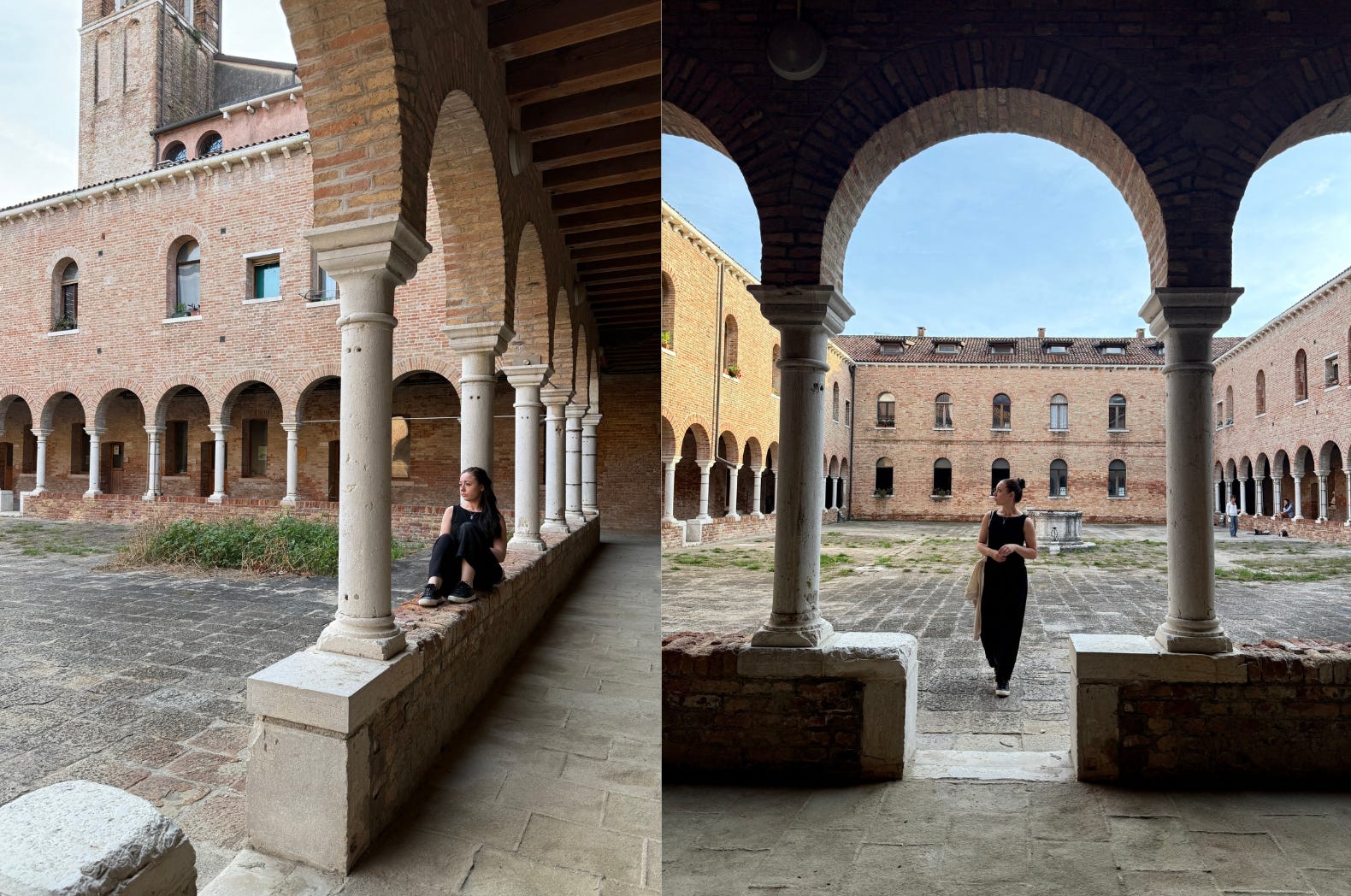
Who leads me these days? What kind of God?
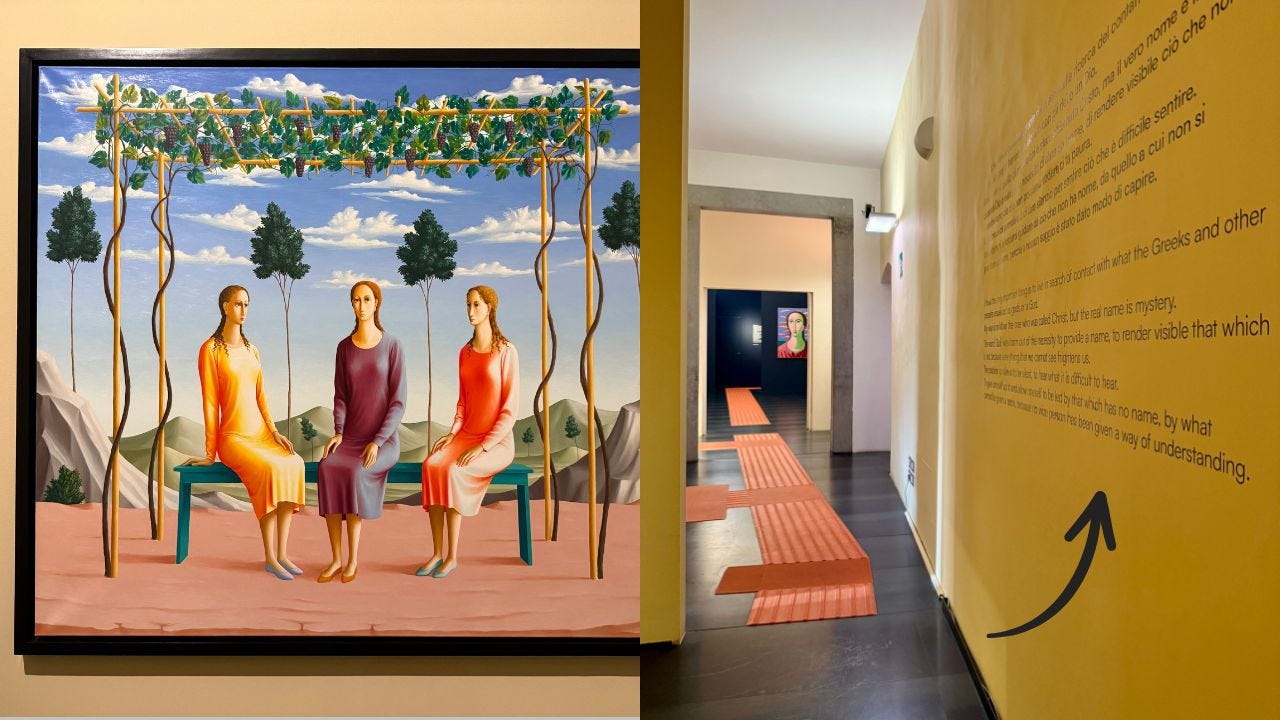
An artist spoke to me in words on a wall in an art gallery:
“I think the only important thing is to live in search of contact with what the Greeks and other peoples visualised as gods or a God.
My way is to follow one who was called Christ, but the real name is a mystery.
The word ‘God’ was born out of necessity to provide a name, to render visible that which is not, because everything that we cannot see frightens us.
The position to take is to be silent, to hear what it is difficult to hear. To give oneself up to and allow oneself to be led by that which has no name, by what cannot be given a name, because no wise person has been given a way of understaning.”
Lorenzo Bonechi
Thats all for now. I feel better.
Blessings from Pistoia 🇮🇪
A.
"one discovers anything and everything when they need it." That reminds me a channeler that says some civilizations dont really know anything, they tuned with the information they need in the moment they need it.